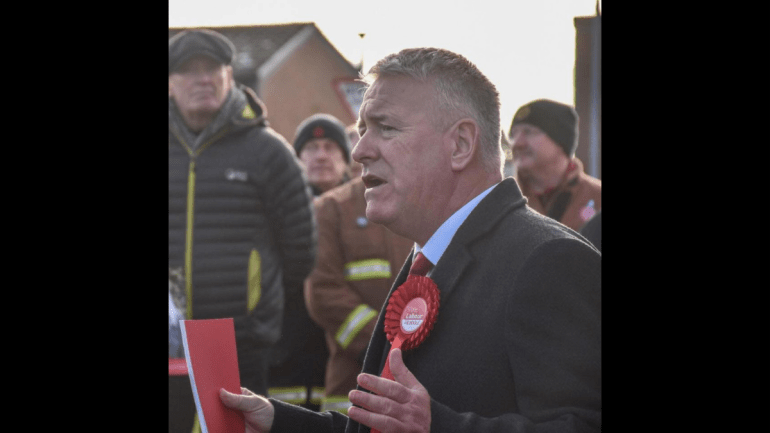
“The terrible reality of the Thatcherite privatisations is now in the headlines on a daily basis.”
Ian Lavery MP
By Ian Lavery MP
During the long years of the Thatcher and Major Governments the people of the UK were sold the line that publicly run utilities were wasteful and inefficient and that we would be better served by privately owned companies. Private ownership would bring greater investment, innovation and lower costs. Sure, the rich and powerful corporate investors would profit, but so would the public. Market forces would be our salvation, a neo-liberal life of plenty for all was our destiny.
The terrible reality of the Thatcherite privatisations is now in the headlines on a daily basis. Over the last forty years large dividends have been paid to the corporate owners of our utilities, but we the public have just had higher bills and increasingly poor service. The much-heralded investment has been insufficient to meet our needs and we are now being told we have to pay for the years of corporate neglect through higher bills. The so called “powerful regulators” that we have been assured would protect us are in truth an administrative Dad’s Army at best.
The public no longer accepts the mantra that private is better and polls show increasing support for bringing utilities back into public ownership. This is not surprising after decades of raw sewage discharges, cuts in bus services, the highest rail ticket prices in Europe and a market in energy that even right-wing economists describe as “broken”.
I regret, however, that some in the Labour Party leadership seem to be lagging behind public opinion in this regard. Now is the time for those in the Party who seem broadly to have accepted the Thatcherite post 1970’s settlement finally to break with it, just as the Thatcherite Tories broke with the post war social democratic consensus that their leaders had previously taken to be immutable. We have to move on from a failing economic model and create a new socialist version of public ownership that is inclusive, accountable and, above all, democratic. If done correctly working-class people could accept that publicly controlled utilities are being run to serve, not just to exploit workers and consumers. I very much doubt that anything close to these positive feelings could be achieved by a Regulator.
We have to be realistic, public ownership of some utilities will be complicated and may take some time to achieve. Nevertheless, some like water should be relatively easy. Thames Water is on the verge of bankruptcy and others would be less attractive to investors if Government forces these companies to rectify previous neglect by investing billions of pounds immediately for rapid improvements in river water quality. Share values would fall which could allow the Government to acquire these companies at low costs. Steve Byers, a previous Labour Secretary of State for Industry, used a similar set of circumstances as those Thames Water finds itself in to wind up the private sector rail infrastructure company Railtrack in order to create the publicly owned Network Rail. If the Blair Labour Government can achieve this, why can’t one lead by Keir Starmer?
There are some encouraging signs. The Labour Party remains committed to replacing private rail operators’ contracts as they come to an end with publicly controlled alternatives. The much-trumpeted GB Energy could be a useful means of starting the transition to publicly controlled energy utilities. Regional Mayors such as Andy Burnham in Manchester and the London Mayor Sadiq Khan have shown what Labour in power can achieve in terms of democratic control of local public transport if it has the political will to take radical steps. The Labour Party must acknowledge the public’s support for change and declare its ambitious goal of eventually taking all privatised utilities back into public ownership at the earliest possible date.
Of course, as a member of the Parliamentary Select Committee on Business and Trade which is investigating the current Post Office Scandal, I know that public ownership on its own is not a panacea. The old-style nationalisation model created state owned industries that were run as if they were private. They have often been perceived by employees and consumers as being just as bad as privately owned companies in many ways. We must create a new socialist model of decentralised democratic public ownership with regional boards directly accountable to their communities and national boards reporting with utmost transparency to Parliament. Most importantly, at all levels trade unions and consumer groups must have powerful board representation, not just token numbers.
The Labour Party must be bold and commit to public ownership of essential utilities. We have a wonderful opportunity to demonstrate that socialist solutions are far better for us all than ones based on private greed. Let’s grab it.
- Ian Lavery is the MP for Wansbeck and a Labour Outlook regular columnist, you can follow him on Facebook, Instagram and Twitter/X.
- If you support Labour Outlook’s work amplifying the voices of left movements and struggles here and internationally, please consider becoming a supporter on Patreon.